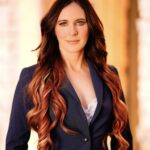
Ashley Hlebinsky is one of the foremost authorities on firearms and ammunition history in the world. Through The Gun Code, LLC, Hlebinsky serves as a consultant, overseeing history-related projects around the world.
She co-founded and serves as the Executive Director of the University of Wyoming College of Law’s Firearms Research Center, where she recently received nearly $1million from the U.S. Department of Education. Additionally, she is a Founding Member of the Centre for the Study of Arms History in the UK and serves on the editorial board of Armax: The Journal of Contemporary Arms.
Hlebinsky has worked with other non-profits, such as the Smithsonian Institution, the National Park Service, Los Angeles Police Museum, National Museum of Law Enforcement and Organized Crime (The Mob Museum), and Houston Museum of Natural Science. Currently, she is building a new firearms museum in Manitoba, Canada. For a decade, Hlebinsky worked for and ran the most prominent firearms museum in the world, the Cody Firearms Museum at the Buffalo Bill Center of the West. During her tenure, she oversaw the full-scale $12million renovation of the museum, which reopened in 2019.
In addition to non-profits, Hlebinsky has worked with and advised for-profit companies such as Hindman Auctions, Colt CZ Group, Ruger, Staccato Firearms, Dillon Precision, and Daniel Defense. She has also been an expert witness in nearly 30 civil and criminal cases in the US and Canada.
Hlebinsky is a notable public figure, formerly co-hosting a show on the Discovery Channel and currently appearing on Outdoor Channel’s Gun Stories with Joe Mantegna (11 seasons) and Fox Nation’s Wanted: Dead or Alive with Sean Hannity. She has been an on-air personality, producer, and/or writer for networks such as National Geographic, History, Travel, Public Broadcasting Service, the British Broadcasting Corporation, and National Public Radio. In addition, she is a regular contributor for the popular podcast, Our American Stories with Lee Habeeb, which receives 8million downloads a month. She has been published over 200 times in popular and academic outlets.
Outside of her historical work, Hlebinsky is a mental health advocate, serving on the Board of Walk the Talk America, an organization that works with clinicians to better understand gun owners and reduce stigmas surrounding mental illness in the gun community, and Warrior Dog Spirit Foundation, a new organization that works to pair first responders with service dogs.
CLICK HERE FOR THE VIDEO VERSION ON YOUTUBE
CLICK HERE FOR THE VIDEO VERSION ON GUNSTREAMER
Our guest today is Ashley Hlebinsky. Ashley is one of the nation’s foremost authorities on firearms history. Recently, she served as both Curator of the Cody Firearms Museum (CFM) and Project Director for the museum’s multimillion dollar renovation that reopened in July 2019.
Due to her and her team’s efforts, the museum has received positive reviews from both gun and mainstream media and is seen as the premiere gun museum in the world that fosters dialogue for a range of diverse audiences
Additionally, Hlebinsky is a highly sought-after museum consultant, guest speaker, writer, and expert witness in the US and Canada. And, in her “spare time” she is a television host and producer, as well as being a member of The DC Project.
1) In our intro we mentioned that you are an expert witness. You recently offered testimony as a subject matter expert to Senate Judiciary’s Subcommittee on the Constitution, in a hearing titled: Stop Gun Violence: Ghost Guns. But, you don’t use that term and told the Senate as much. Can you expound on that?
– “Firstly, I will not be using the term ghost gun and that’s because as a historian I try to be as precise as possible and the term is used more as a rhetorical tool, a marketing tool and because of that, it can create a false sense of authority on the subject,” Hlebinsky told the senators. It’s too easy to conflate with something that is invisible, undetectable or untraceable. None of which is true. privately made firearms have been around for centuries, basically since the first system was developed over 500 years ago.”
2) The people who consider themselves Pro-Rights too often adopt the language of the Prohibitionists. We have “assault rifle”, “ghost gun”, and even “sanctuary cities”. In some ways there is strength in appropriating language. But, then we find ourselves on our back foot trying to un-attach the connotations that the Prohibitionists use to scare the public. As a historian, how do you see this language issue playing out in the long run?
3) You occupy a unique space in a heated and polarizing conversation. You are decidedly and agnostic in your political leanings in public and in your work. The 2A is not a political issue, but it has become political football over the years. How do you manage to be both neutral in our current political climate?
4) What other projects are you currently working on?